
AI Tools for Therapists

Practical AI Tools for Therapists, Grounded in Workflow Support

enodoHealth approaches AI as support for reminders, summaries, mood tracking, and preparation workflows rather than as a replacement for therapy or clinical judgment.

Responsible AI walkthrough

See how reminders, summaries, and pre-session context fit into therapist workflows

Review the AI support layer inside enodoHealth with clear boundaries around professional judgment, configured workflows, and patient engagement.

Practical AI

Focus on workflow support, not hype

Therapists searching for AI tools are often trying to reduce admin friction and improve preparation, not hand over therapy to software. The strongest page for this audience is explicit about that need.

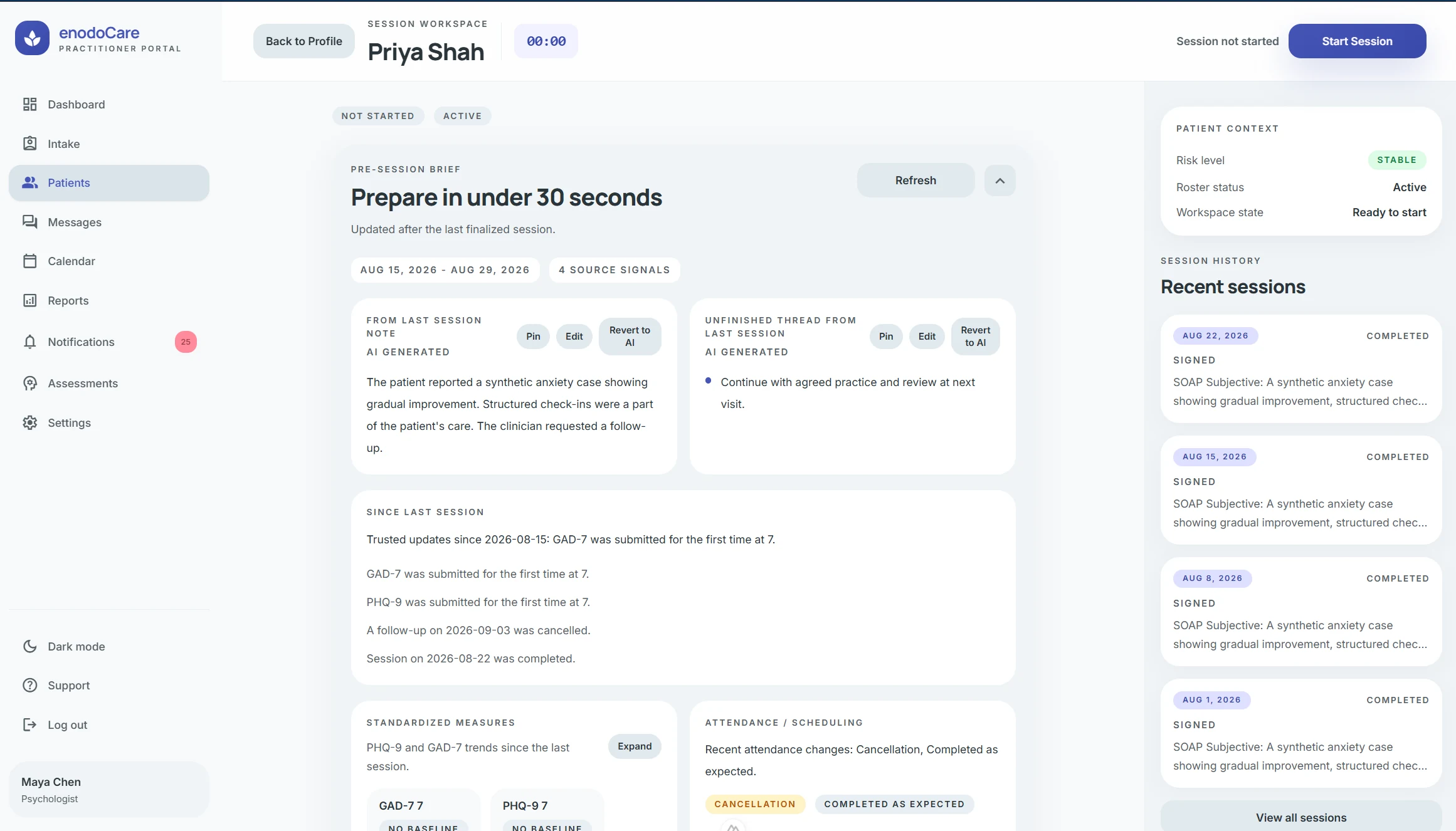
enodoHealth positions AI as support for reminders, summaries, mood tracking, and pre-session context. The public story should help therapists understand what the product does in a workflow sense and what it does not claim to do clinically.

  • check_circleUse AI to support organization and preparation
  • check_circleKeep professional review at the center of care
  • check_circleAvoid replacement or diagnosis claims

Between-session support

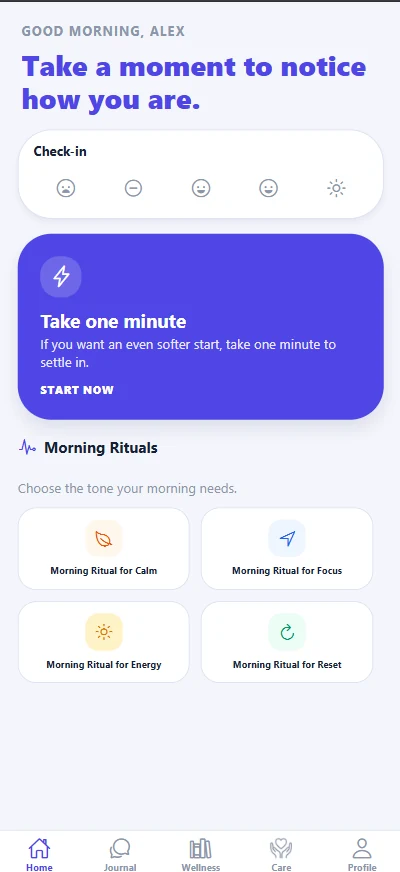
Use reminders and mood tracking to keep patient follow-through visible

The most useful AI-adjacent workflow in behavioral health is often structured follow-through. Patients benefit from reminders, check-ins, and a simple way to share how things went between visits. Therapists benefit from seeing whether that support actually happened.

enodoAlly is described around that practical loop. It helps therapists stay oriented to between-session activity without implying that software independently interprets the therapeutic meaning of each signal.

  • check_circleStructured reminders that support follow-through
  • check_circleMood tracking that contributes context for therapist review
  • check_circleA patient-engagement layer that stays tied to the care workflow

Summaries

Use summaries and pre-session reports to prepare more efficiently

AI support is most defensible when it reduces manual review time and helps a therapist orient to the week's relevant context before a visit. Summaries and pre-session reports fit that need well when they are framed as preparation support.

That framing is important for both trust and compliance. A summary should help surface what happened. The therapist still decides what matters, how to interpret it, and how to use it in care.

  • check_circleShorter prep loops before appointments
  • check_circleA structured view of engagement and task completion
  • check_circleTherapist interpretation remains the final step

Guardrails

Design for professional review and configured workflows

AI positioning in mental health requires clear boundaries. enodoHealth should speak in terms of support, review, and configured workflows rather than independent clinical action. That keeps the message aligned with how a therapist expects to evaluate new software in a high-trust domain.

The product can describe safety-focused guardrails, concerning language surfacing, and engagement-pattern review only as support for professional follow-up based on configured workflows. It should not imply guaranteed detection, autonomous escalation, or emergency coverage.

  • check_circleSupport-oriented language instead of autonomous-action language
  • check_circleConfigured review workflows rather than guaranteed detection claims
  • check_circleClear boundaries around emergencies and crisis support

What enodoHealth does not claim

Keep the AI story specific and conservative

This page should make the exclusions clear. enodoHealth does not position itself as an AI therapist, a diagnostic engine, or a replacement for the therapeutic relationship. It does not promise crisis detection guarantees or autonomous treatment guidance.

That restraint is part of the product strategy, not a weakness in it. It helps buyers understand the real value of the platform: practical support for therapist workflows, patient engagement, and preparation.

  • check_circleNot a therapist replacement
  • check_circleNot autonomous diagnosis or treatment planning
  • check_circleNot emergency or crisis-response software

FAQ

Questions therapists ask about AI support in mental health software

What kind of AI tools does enodoHealth provide for therapists?

enodoHealth describes AI support in terms of reminders, mood tracking, summaries, and pre-session context that help therapists prepare and maintain continuity between visits.

Why is the AI positioning described as support rather than replacement?

Because the intended value is workflow support and preparation. The platform does not claim to replace therapy, clinical judgment, diagnosis, or treatment planning.

How do summaries help therapists?

Summaries can reduce manual review time by organizing relevant engagement context before a session, while leaving interpretation and care decisions to the clinician.

Can enodoHealth automatically detect crises or emergencies?

No. The product should not be described as guaranteed crisis detection or emergency-response software.

How are guardrails described on the AI page?

The page explains guardrails in terms of professional review and configured workflows, including the ability to help surface concerning language or engagement patterns for follow-up.

What does enodoHealth explicitly avoid claiming?

It avoids claims about autonomous diagnosis, treatment recommendations, therapist replacement, and guaranteed risk detection.

Where does the AI support layer live in the product?

The AI-assisted support layer is presented through enodoAlly and connects back to the broader enodoHealth workflow for patient engagement and therapist preparation.

See the AI support layer inside enodoHealth

Book a demo to review reminders, mood tracking, summaries, and therapist preparation workflows with conservative, support-oriented AI positioning.